| |
|
 Who to call What to Say Why It's
Important Further
References Who to call What to Say Why It's
Important Further
References
|
| |
 Whom Do I Call? Whom Do I Call?
 If you suspect
abuse or neglect of an animal or animals--REPORT IT!!!! Abuse or
neglect consist of: filthy conditions, animals packed into cages or runs,
apparently sick animals, lack of food or water, moldy or rotting food, dirty
water, untreated injuries, actual physical abuse observed, etc. You can suspect
abuse when animals cringe when you approach or show signs of multiple recent or
old injuries. If you suspect
abuse or neglect of an animal or animals--REPORT IT!!!! Abuse or
neglect consist of: filthy conditions, animals packed into cages or runs,
apparently sick animals, lack of food or water, moldy or rotting food, dirty
water, untreated injuries, actual physical abuse observed, etc. You can suspect
abuse when animals cringe when you approach or show signs of multiple recent or
old injuries.
Contact your local
humane society, animal shelter, or animal control facility, immediately and see
if there is a trained cruelty investigator to whom you can speak. If you don't
have a shelter in your area, please call your local law enforcement agency or,
if conditions are unsanitary or there are sick or dead animals in evidence,
call your local health department as well.
It's always better
if you are able to give your name, sign a complaint, and, if necessary, testify
against an abuser — many animal abuse/neglect cases have gone unprosecuted
because witnesses refuse to sign a complaint or testify in court. However, if
this is a case where you are afraid to leave your name, report anonymously, but
DO report it!
In Wisconsin,
certified Humane Officers investigate cruelty, neglect, and abuse reports.
However, they cannot excute search warrants or make arrests unless they are
also law enforcement officers. See:
WI Humane Officers Program and
"Appointed Humane Officers in Wisconsin" on the
Department of Agriculture, Trade, and Consumer Protection website for more
information.
Since anti-cruelty
laws vary state to state, who will investigate and prosecute animal cruelty
also varies by state. Call or visit your local police department or your local
shelter or animal control agency for assistance in finding out whom you need to
talk to.
Note: Unless it is a
matter of life or death for an animal and requires immediate intervention, do
NOT try to handle an abuse or neglect situation on your own. In addition to
possibly endangering your own safety, you may do more harm than good for the
animal/animals you are trying to help.
|
| |
Top
|
| |
What Do I Say?
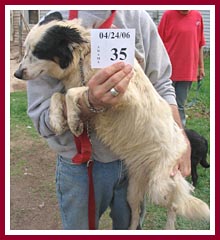 When reporting animal
cruelty, please have the facts and documentation at hand: When reporting animal
cruelty, please have the facts and documentation at hand:
A concise, written, factual statement of what you observed;
Exact address where the animal can be found;
Specific dates and approximate times of the observed abuse;
Photographs, if possible without endangering your safety or breaking the
law;
- Short, factual, written statements from other witnesses, if any -- with an
on-going situation, take a friend along, if possible.
Be sure to write
down exactly whom you speak with when you make your report, the date and time
you talked, and the content of the conversation. If you have any written or
photographic documentation, be sure not to give anyone your only copy!
Follow up -- if
the investigator doesn't get back to you within a reasonable length of time,
call him or her back to check on the progress of the investigation.
For an excellent
article on reporting animal cruelty, including who to report to, what
information you will need to give, and how to follow up, please see the
Reporting Animal Cruelty section of the ASPCA website.
|
| |
Top
|
| |
Why Is Reporting
Important?
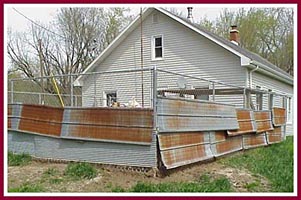 First and foremost,
of course, reporting instances of animal cruelty or neglect is critical to
ending the abuse that you have observed. For instance, because a would-be
customer of a backyard breeder / dog hoarder reported the crowded, filthy, and
stinking conditions she found when she went to purchase a puppy that she read
about in a classified ad, a team of several humane agencies was able to
intervene. (There were 76 mostly large-breed dogs and puppies living in the
crowded backyard pictured here; see Drive To Save Lives for the details.) First and foremost,
of course, reporting instances of animal cruelty or neglect is critical to
ending the abuse that you have observed. For instance, because a would-be
customer of a backyard breeder / dog hoarder reported the crowded, filthy, and
stinking conditions she found when she went to purchase a puppy that she read
about in a classified ad, a team of several humane agencies was able to
intervene. (There were 76 mostly large-breed dogs and puppies living in the
crowded backyard pictured here; see Drive To Save Lives for the details.)
Even if it's one
of those frustrating "borderline" situations just inside of the law,
your report will be part of a file documenting that situation, and might just
be the additional evidence needed to prosecute at a later date.
Unfortunately,
some law enforcement agencies put a low priority on animal cruelty reports. The
laws are vague, and with a few exceptions, most police academies don't offer
classes on conducting animal abuse investigations. In such cases, sometimes a
polite reminder is appropriate that animal abuse (dog fighting in particular)
is often directly connected with other illegal activities, such as drug
dealing, gambling, firearms violations, etc. In the case of puppy millers, the
illegal activities could include federal, state, and local tax fraud to the
tune of several thousand dollars a year!
Sometimes, we need
to remind others that those who are cruel to animals will also be cruel to
other humans if given the chance. There is a documented link between animal
abuse and violent acts against people; many notorious killers
"practiced" on animals first.
Animal abuse in a
household may also be an indicator of spousal, elder, or child abuse. In
domestic violence situations, a pet is often held "hostage" to
control the behavior of another adult or a child, and a child who is cruel to
animals may be "acting out" what is happening in his/her home.
For a good article
on all facets of the connection between animal abuse and viloence against
humans, please see the Humane Society of the US website:
Animal Cruelty and Human Violence: A documented connection.
You can also download the
HSUS "First Strike" brochure or
The
Common Bond Between Animal Abuse and Child Abuse in pdf.
Please see our
Animal Hoarding section for more
insight into this problem -- which is more common than you might thing.
Share with your
local police, sheriff department, prosecutors, etc. to remind them why it is
important to investigate and prosecute "animal cases."
Always, always, ALWAYS be courteous and respectful
when dealing with law enforcement officers, animal control representatives, and
the people in the prosecutor's office! You will do the animals you are
trying to help much more harm than good if you are pushy, argumentative, rude,
or confrontational!
|
| |
Top
|
| |
 Where Can I Learn More? Where Can I Learn More?
|
| |
Top
WI Appointed Humane Officers WI Humane Laws
|
| |
Home * About
WPMP * Contact Us * Site
Search * Donate
What is a Puppy
Mill? * Puppy Mill Survivors * Photo
Album * The Petstore Connection
Dog
Auctions * Animal
Hoarding * What YOU Can Do
Laws/Legislation * Act 90/S.173.41/ WI Dog Program
* Filing a Complaint Against a WI Dog Seller
Guide to Finding a
Pet * Breeders With Pride * Rehoming: Free To Good Home?
©
Copyright, 2008. The Wisconsin Puppy MIll Project
P.O. Box 926 * Sheboygan, WI
53082-0926 * info@NoWisconsinPuppyMills.com
Photos Copyright © 2006,
Wisconsin Puppy Mill Project. All Rights Reserved. Used with permission.
Website design by
Hook & Web
Designs
|